Does Bronze Jewellery Tarnish? An Honest Answer, and How to Live With It
10 September 2026 · 6 min read
Short answer: yes. Bronze jewellery tarnishes, and anything claiming otherwise either is not bronze or has been sealed under a coating that will wear off in time anyway. But does bronze jewellery tarnish is really two questions wearing one coat — will it change? and will that ruin it? — and the answers could not be more different. Change is guaranteed. Ruin is entirely avoidable, and mostly comes down to about five minutes of attention a month.
Here is what is actually happening to the metal, and what to do about it.
What tarnish actually is
Bronze is copper with a little tin in it, usually somewhere near 90/10. Copper is a sociable metal. It reacts with oxygen, moisture and the traces of sulphur drifting about in ordinary air, and the result is a very thin surface layer that darkens the piece. That is tarnish. It is skin-deep in the literal sense — the bronze underneath is untouched, which is why a tarnished piece can be brought back and a plated one usually cannot.
What you notice first is the shine going quiet. A new piece of bronze jewellery starts out a bright golden-pink and settles, over weeks, into something browner and warmer. Left somewhere damp for long enough, copper can go further and throw up verdigris — the powdery blue-green you see on church roofs and harbour statues. On a pendant kept in a drawer, that is rare. On a ring worn in the sea every morning, considerably less so.
Worth saying plainly: bronze does not rust. Rust needs iron, and bronze contains none. The two words get swapped around constantly, but nothing is flaking away and nothing is being eaten.
The green finger question
This is the one people are too polite to ask in a shop, so: yes, bronze can leave a green mark on skin, and no, it does not mean you have been sold something cheap.
The acids in sweat, and quite often the moisturiser or hand cream underneath, react with the copper to form copper salts. Those salts are green and they transfer to skin. They are harmless, they wash off with soap, and they are far more likely in August than in February. Rings are the usual culprits because they sit against a warm, enclosed patch of skin all day. Earrings and pendants rarely cause it at all.
It is also not an allergy. Sterling silver is about 7.5% copper and does exactly the same thing on the right person in the wrong weather. If you are prone to it, keep the piece dry, wash your hands before putting a ring back on, and give it a wipe at the end of the day.
Slowing it down
You cannot stop tarnish, but you can make it a once-a-season job rather than a running battle.
- Store it dry and store it sealed. A small airtight bag with an anti-tarnish strip does most of the work. The silica gel sachet from a shoebox is a decent substitute.
- Perfume and lotion go on first. Let them dry, then put the jewellery on. Fragrance is one of the harsher things bronze meets in a normal day.
- Take it off for water. Showers, swimming pools, the washing-up, the gym. Chlorine and salt both accelerate things noticeably.
- Wipe it before it goes away. Ten seconds with a soft dry cloth removes the sweat and oils that would otherwise sit on the surface all week.
For a piece worn only occasionally — cufflinks that come out for weddings, say — a thin coat of microcrystalline conservation wax buys you a year of doing nothing at all.
How to clean bronze jewellery at home
Start gently, because gentle usually works. Warm water, a drop of washing-up liquid, a soft cloth or an old toothbrush for the textured bits, then dry it thoroughly. That handles the great majority of everyday dulling.
If the tarnish has gone properly dark, make a loose paste from bicarbonate of soda and lemon juice, work it over the metal for no more than thirty seconds or so, rinse well and dry immediately. The acid lifts the copper oxide; leaving it on longer does not lift more, it just risks a patchy finish.
Two things to avoid. Never take an abrasive — scouring pad, toothpaste, wire wool — to a polished surface, because you will trade tarnish for a fine mesh of scratches you cannot undo. And keep any paste away from set stones, pearls and silver chains; soapy water only for those.
Then dry it properly. Trapped moisture is the single most common reason a piece tarnishes again a fortnight after being cleaned.
When to leave well alone
Not all darkening is a problem to be solved. On hammered, beaten and forge-textured work, the patina collecting in the recesses is the reason the piece has any depth at all. Polish it uniformly bright and you flatten the very contrast the maker hammered in.
Bronze anniversary sculptures are the clearest case: those surfaces are deliberately patinated by hand, and cleaning them is genuinely a mistake. Dust them, admire them, leave the chemistry alone.
There is a nice symmetry in this, given that bronze marks the eighth wedding anniversary and, in the UK, the nineteenth as well. The meaning of the bronze anniversary is durability that shows its age rather than hiding it, and a pendant that looked identical after ten years would rather miss the point.
Pieces that wear their years well
If you want bronze that improves rather than merely survives, texture is your friend. Here is a knowledgeable friend's shortlist — hammered and beaten finishes that turn patina into an asset, plus one polished piece for anyone who likes things bright.
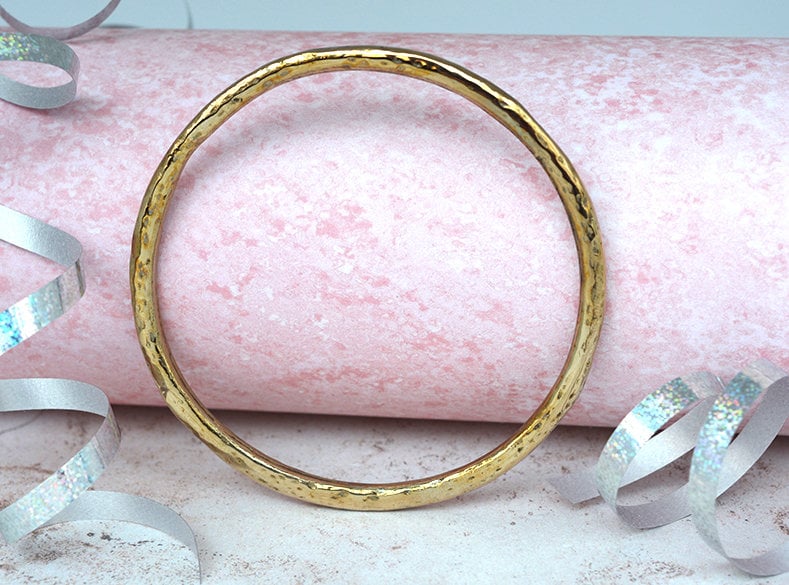
Bronze Beaten Bangle
£58.00
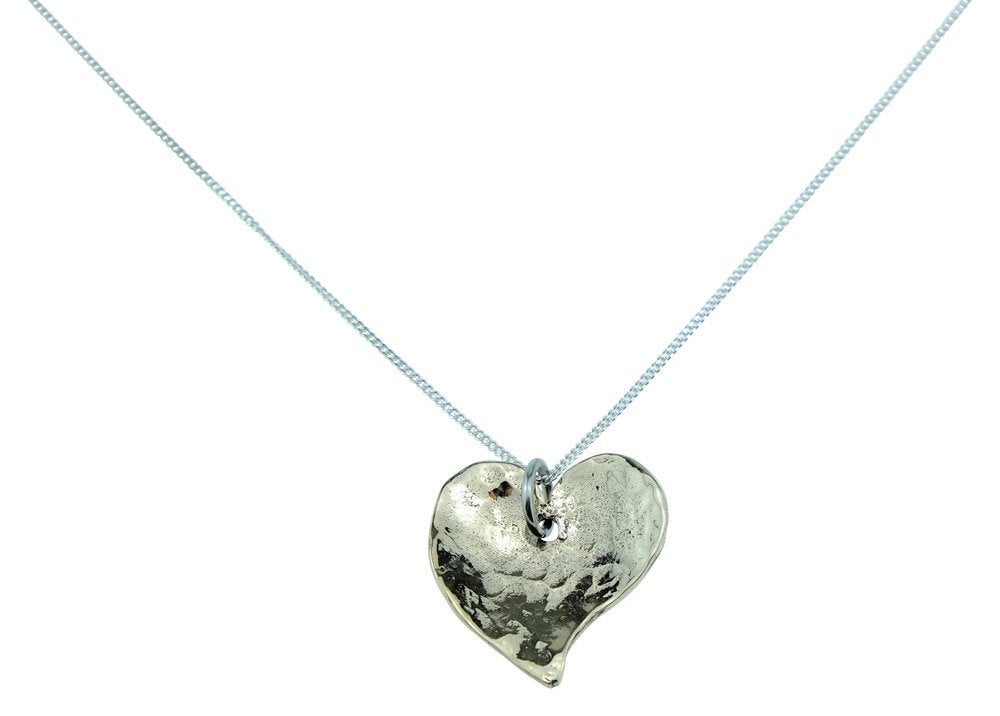
Hammered Bronze Heart Pendant
£42.00
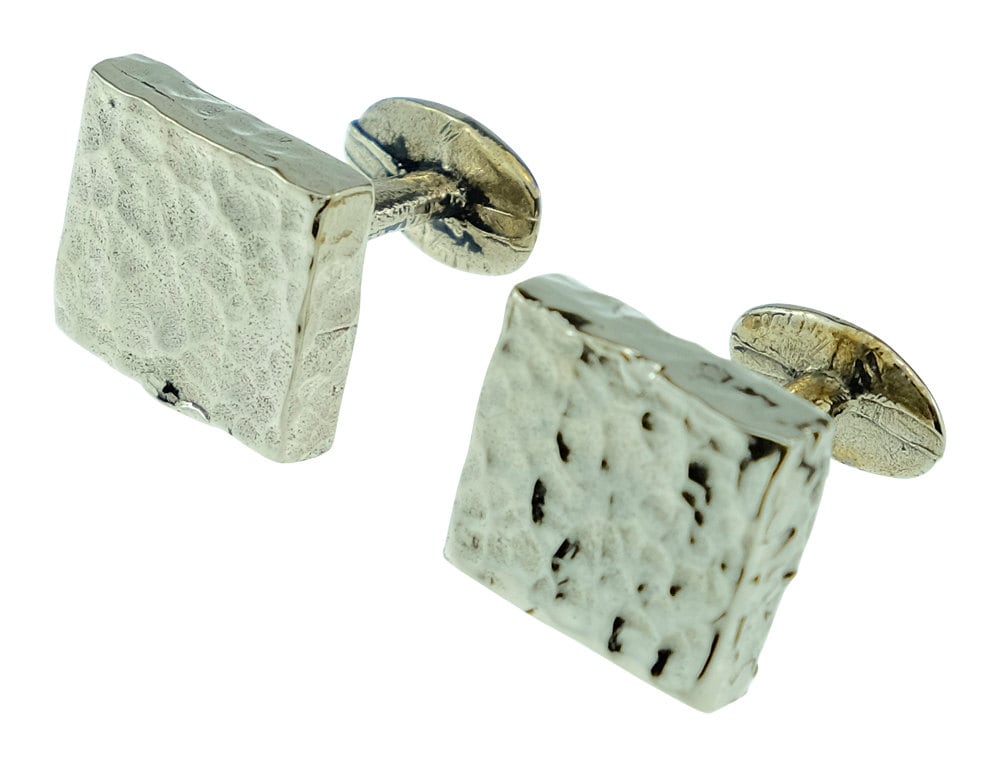
Forge-Hammered Rustic Bronze Cufflinks
£42.00
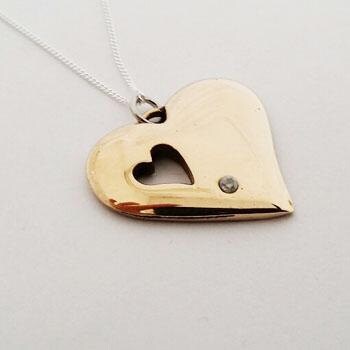
Bronze and Diamond Anniversary Pendant
£99.00
More in our guides to bronze gifts for her and bronze gifts for him, or browse the full bronze anniversary gift range.
Frequently asked questions
How long does bronze jewellery take to tarnish?
Weeks rather than days for the first visible change, though it depends enormously on how it is worn and stored. A pendant worn against the skin daily in summer will shift within a month; the same piece in a sealed bag can look new after a year.
Is tarnished bronze jewellery ruined?
No. Tarnish is a surface layer, not damage, and it comes off with warm soapy water or a bicarbonate paste. Solid bronze can be cleaned back to brightness repeatedly, which is not true of plated jewellery.
Can you wear bronze jewellery in the shower?
You can, but it will tarnish faster and any green marking on skin becomes more likely. Soap residue and standing water are the two things bronze likes least. Take it off, and dry it if it does get wet.
Does bronze jewellery cause allergies?
Rarely. Green marking is a harmless surface reaction, not an allergic one. People with a genuine copper or nickel sensitivity should check the alloy first, but standard copper-tin bronze contains no nickel. Our women's and men's ranges are all solid bronze rather than plated.