Bronze Patina: What It Is and Why Your Bronze Changes Colour
19 November 2026 · 5 min read
Bronze patina is the thin layer of colour that forms on the surface of bronze as the copper in it reacts with air, moisture and skin. It is not damage. It is the reason an old bronze statue looks brown, green or almost black, and it is why a piece of bronze you give for an anniversary will look a little different every year. If you have ever wondered why your bronze darkened, or whether you should polish it back, this is the short, honest answer.
What actually happens to the metal
Bronze is mostly copper with a little tin. Leave freshly polished bronze out in the open and the copper starts reacting straight away, first with oxygen, then with whatever else is around: sulphur in the air, chlorides in sweat, the oils on your hands. Each reaction leaves behind a very thin compound on the surface. Copper oxides read as warm brown. Copper sulphides push it darker. Copper carbonates and chlorides give you the blue-greens you see on church roofs and park statues.
The important bit is that this layer protects the metal underneath. Unlike rust on iron, which flakes and eats further in, a stable patina slows further change. That is why Bronze Age tools still exist and why bronze is a fair symbol for an eight-year marriage: it gets more character, not weaker.
Is patina the same as tarnish?
Chemically, nearly. The difference is mostly attitude. People say "tarnish" when they do not want the change and "patina" when they do. On a candlestick you meant to keep gleaming, it is tarnish. On a hand-hammered pendant that has been worn every day for three years, the darker recesses and brighter high points are patina, and most people would not want them gone. If you are specifically worried about jewellery and green marks on skin, our guide to whether bronze jewellery tarnishes goes into that in detail.
How fast does bronze patina form?
Faster than people expect, and unevenly. A polished surface can lose its bright pink-gold within a few weeks of regular handling. Over the first year it usually settles into a soft, warm brown. Pieces worn against skin change quickest, because of the salt and oils (earrings and pendants especially, as our bronze earrings guide explains); a sculpture on a dry shelf changes slowest. Damp bathrooms, seaside air and swimming pools all speed things up. You will rarely see real green on indoor bronze; that needs years outdoors in the rain.
Texture matters too. On a hammered or beaten surface the dips darken first while the raised edges stay bright from rubbing, which is exactly why the hand-hammered pieces in our bronze jewellery and bronze cufflinks collections look richer after a year of wear. A perfectly smooth finish shows patina more evenly, more like a gentle darkening all over.
Should you keep the patina or polish it off?
That is a matter of taste, and it is reversible either way. If you like the original bright finish, a soft cloth and a little mild soap will lift light patina, and a jeweller's polishing cloth will bring back the shine. If you like the aged look, simply leave it: wipe the piece with a dry cloth now and then and keep it away from harsh cleaners.
A few things we would avoid on any bronze you care about: abrasive powders, scouring pads and dips that promise instant results. They strip patina unevenly and can leave a raw, blotchy surface that takes months to even out again. For sculptures, such as the family pieces in our bronze anniversary sculptures, dusting is nearly always enough; our bronze sculpture guide covers care for larger pieces.
Why patina makes bronze a good anniversary gift
Most gifts look their best the day you unwrap them. Bronze looks its best years later. The patina on a pendant or a pair of cufflinks is a record of being worn, through ordinary weeks and big days alike, which is a rather lovely thing to give someone at the eighth anniversary, the year bronze is traditionally associated with. If you are choosing for the occasion, start with our 8th anniversary gifts, or go straight to gifts for her and gifts for him. Couples marking nineteen years can also choose bronze; see our 19th anniversary gifts. And if you want to write something about it in the card, there are ideas in what to write in a bronze anniversary card.
One practical tip: if the gift is a surprise, tell them it is meant to change. Plenty of people quietly worry they have done something wrong when their new bronze darkens. Knowing it is supposed to happen turns that into part of the story.
If you like the idea of a gift that grows more characterful with wear, these are the pieces we would point you to first: textured surfaces that take on patina beautifully.
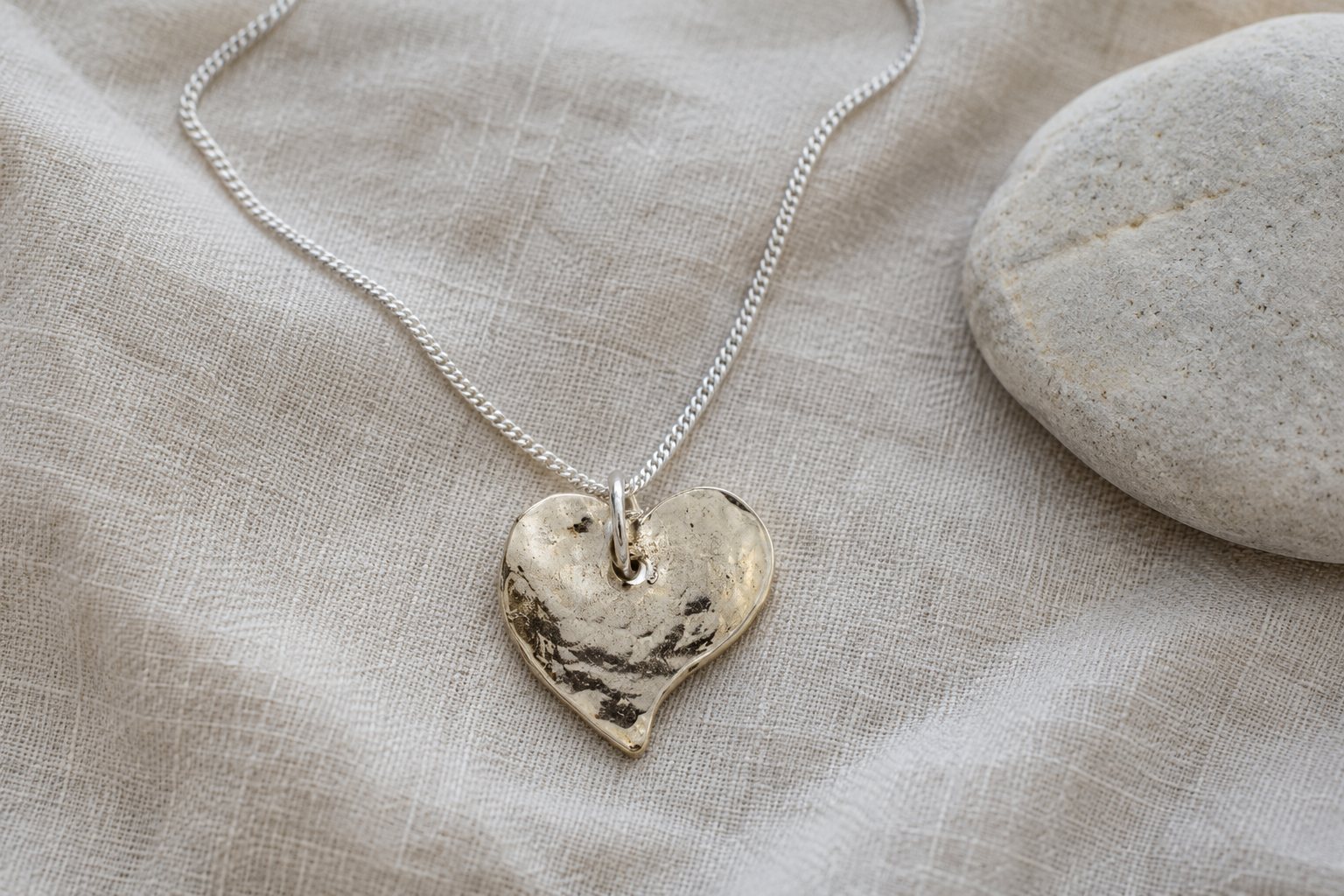 Hammered Bronze Heart Pendant£59.00
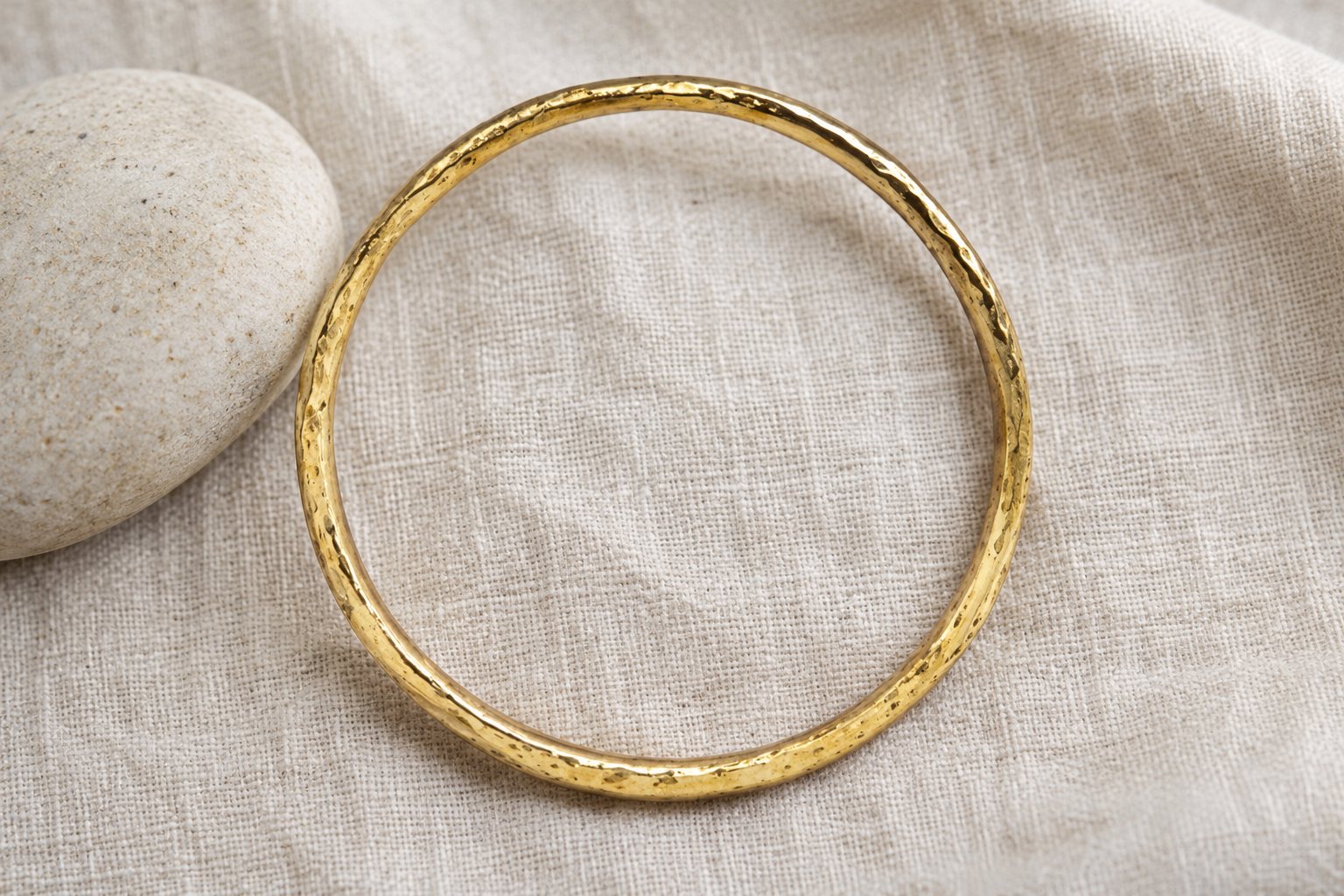 Bronze Beaten Bangle£58.00
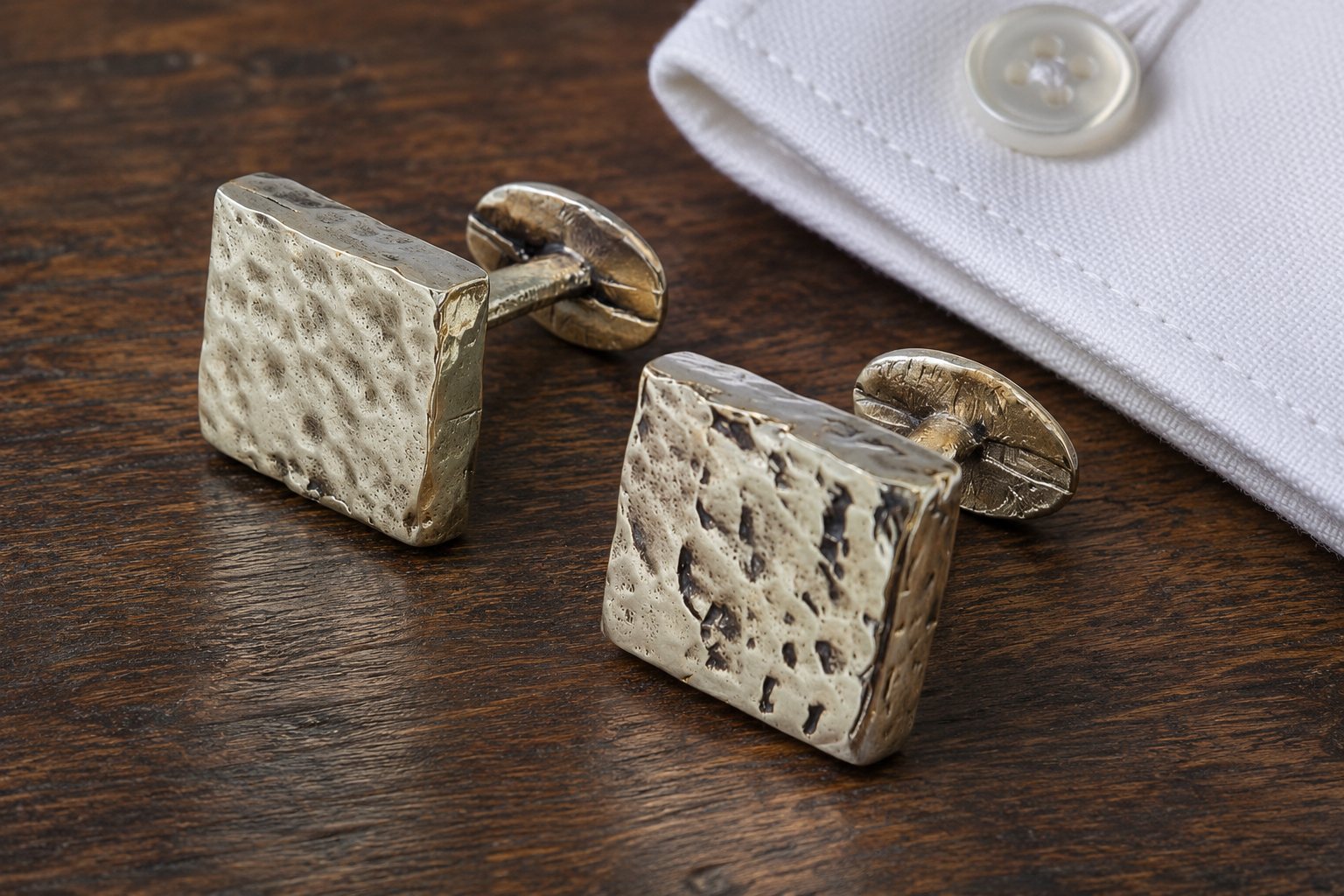 Forge-Hammered Rustic Bronze Cufflinks£49.00
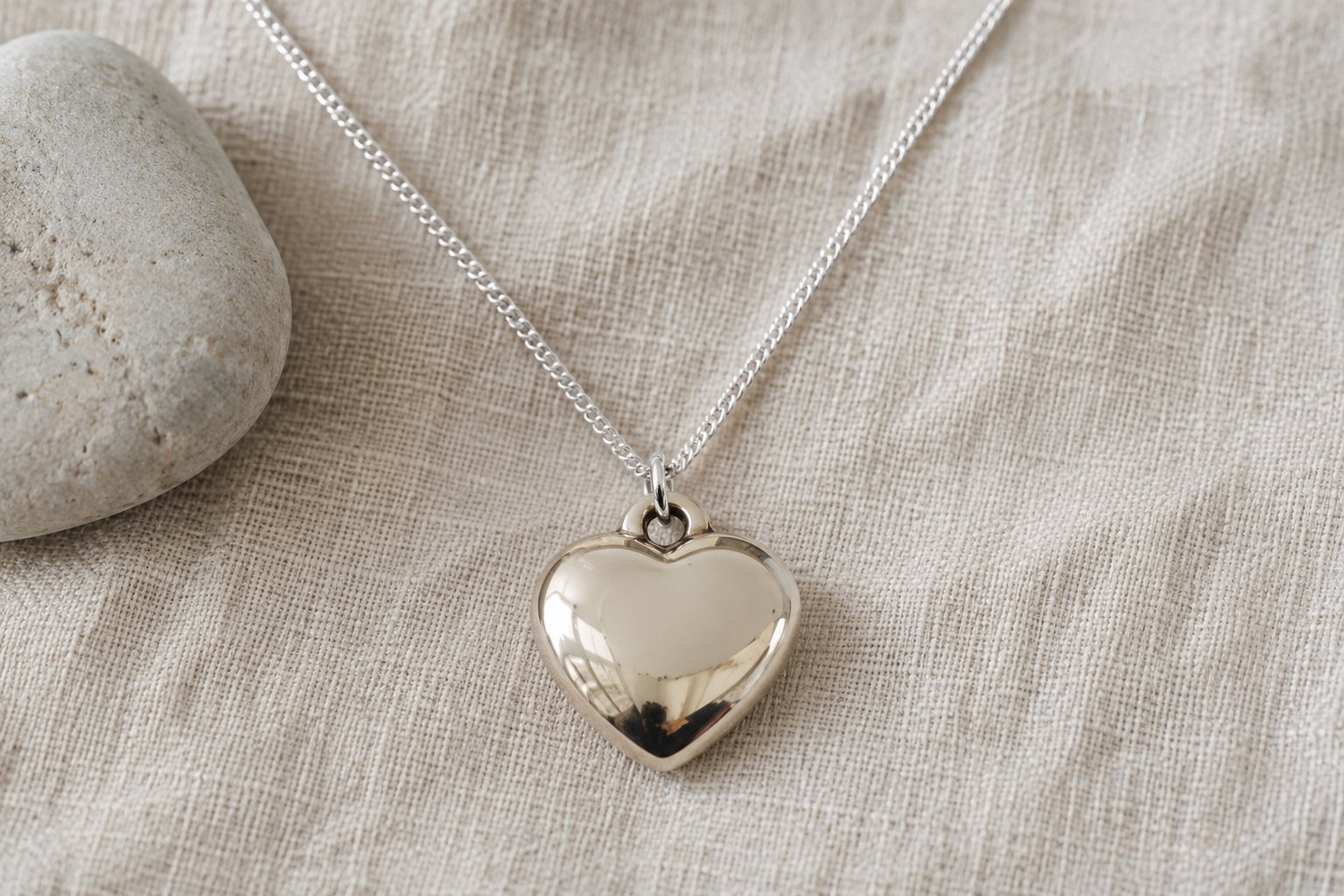 Polished Bronze Heart Pendant£59.00
Frequently asked questions
What is bronze patina?
Bronze patina is a thin layer of copper compounds that forms on the surface as the metal reacts with air, moisture and skin. It usually shows as a warm brown on indoor pieces and can turn green on bronze left outdoors for years. It protects the metal underneath.
Is bronze patina harmful?
No. Patina is a stable surface layer, not corrosion that weakens the metal. On jewellery it can occasionally leave a faint green mark on skin, which washes off with soap and water and is harmless.
How do you remove patina from bronze?
For light patina, wash the piece in warm water with a little mild soap, dry it thoroughly, then buff with a soft jeweller's polishing cloth. Avoid abrasive powders, scouring pads and harsh dips, which strip the surface unevenly.
Can you stop bronze from developing a patina?
You can slow it but not stop it entirely. Keep pieces dry, take jewellery off before swimming or showering, store it in a small pouch, and wipe it with a soft cloth after wearing. Many people prefer to let the patina develop.